Which Tennis Surface Causes the Most Injuries?
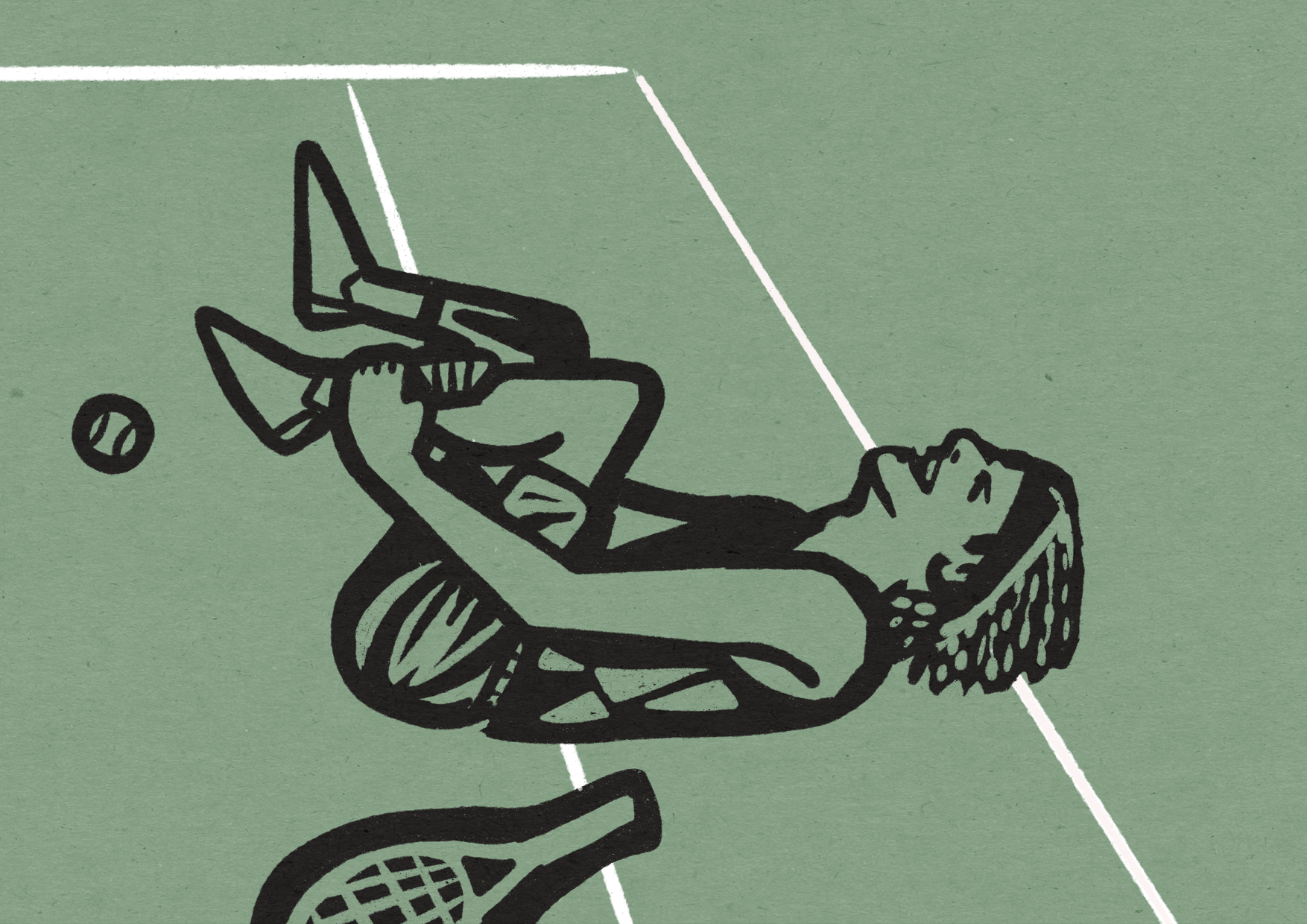
No one wants to get injured while doing something they love. However, unfortunately, like any sport or activity, it is possible that you can injure yourself while playing tennis. The most important thing is to listen to your body and not to play through pain. You might be wondering, “what surface is safer–clay or hard courts?” The underlying tip is do not play in bad weather on any court surface of course, but find out how court surfaces affect injury.

Clay Court Injuries
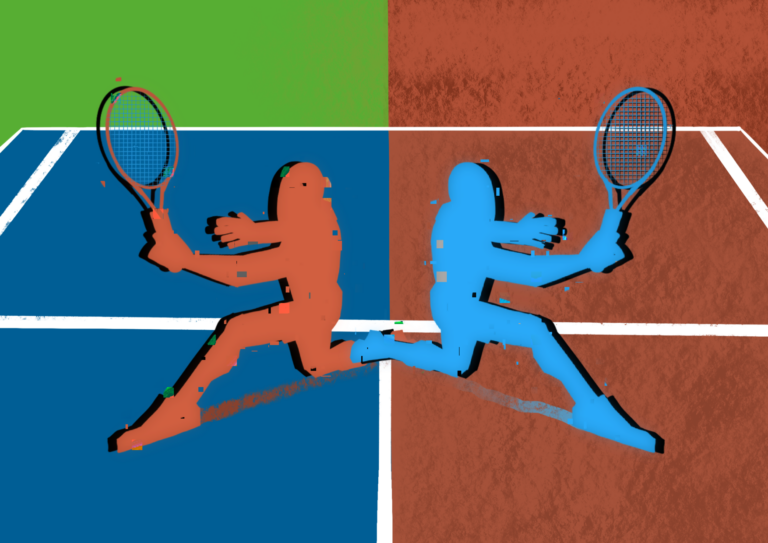
Clay court injuries are ranked low-medium compared to hard courts. Why is that? Well, clay is known for providing some cushion. So, if you do quick, harsh movements on clay, like hopping into position for a volley or split stepping, there is more support on this surface as a whole than there is on hard courts. In fact, clay, as a surface that allows sliding, is expected to have about 75% less injuries than non-sliding surface counterparts.
However, do not be fooled by clay courts. Just because they can be more gentle on your joints does not mean they are absolutely safer. Because many players know they can slide on clay as opposed to hard courts, they sometimes hurt themselves when trying to do this. In fact, many injuries on clay stem from overextending while trying to slide. Sliding might lead to pain in your hamstrings or knees over time.
Grass Court Injuries
Compared to hard courts, grass courts tend to cause less injury. Grass and clay courts rank similarly when it comes to injury levels and also injury location. Similar to clay courts, most injuries for grass court players can be in the upper limbs from extending for the ball. Grass and clay rank similarly when it comes to the friction between the ball and the shoe, which relates to how much force a player has to use when moving.
However, grass courts can lead to different types of injuries because of the low bounce on grass courts. In some cases, this can create glute and hamstring tightness because of the heavier bending associated with grass courts. Those who play on grass are more susceptible to knee pain because of having to bend to get to low bounce balls.
Hard Court Injuries
Hard courts rank the highest in terms of injuries. The surface doesn’t really have any cushion, so that alone puts stress on your body. This means when you’re going through the motions required in tennis, whether it be a split step or getting into place for your body, you are doing more harm to your joints than you would on a clay or grass court. For that reason, many players begin to transition to clay as they age.
What else is important to know about hard court injuries? There is more friction between the shoe and the court on hard courts. This means when you do a sudden movement, you are applying a lot of force to do so in a very quick time span. Unfortunately, this can raise your injury risk at the lower level of the body, with many athletes who get injured on hard courts complaining of shin pain, blisters, and knee injuries.
Tennis Court Type Injuries Compared
| Category | Hard Court | Grass Court | Clay Court |
| Overall Stress on the Body | High | Medium | Low-medium |
| Friction between shoe and court | High | Low-medium | Low-medium |
| Cushion | Low | Medium | Medium |
| Risk level | Medium | Low-medium | Low-medium |
The bottomline is that there is a studied difference between court surfaces and injuries, with hard courts ultimately being associated with a higher risk of injury. However, do not let this stop you from playing the sport that you love! If you do not have access to other court surfaces, or you just simply don’t like clay or grass as much as hard courts, continue playing on hard courts. Simply use this article as a reminder to be more cognizant of your movements and the surface when you are playing. Even if it means losing a point or not getting to a ball, prioritize your safety and health over movements that could potentially be dangerous and injury-inducing.