How long does it take a tennis court to dry?
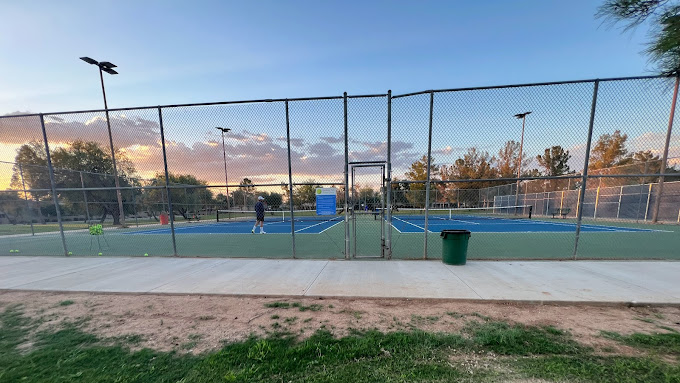
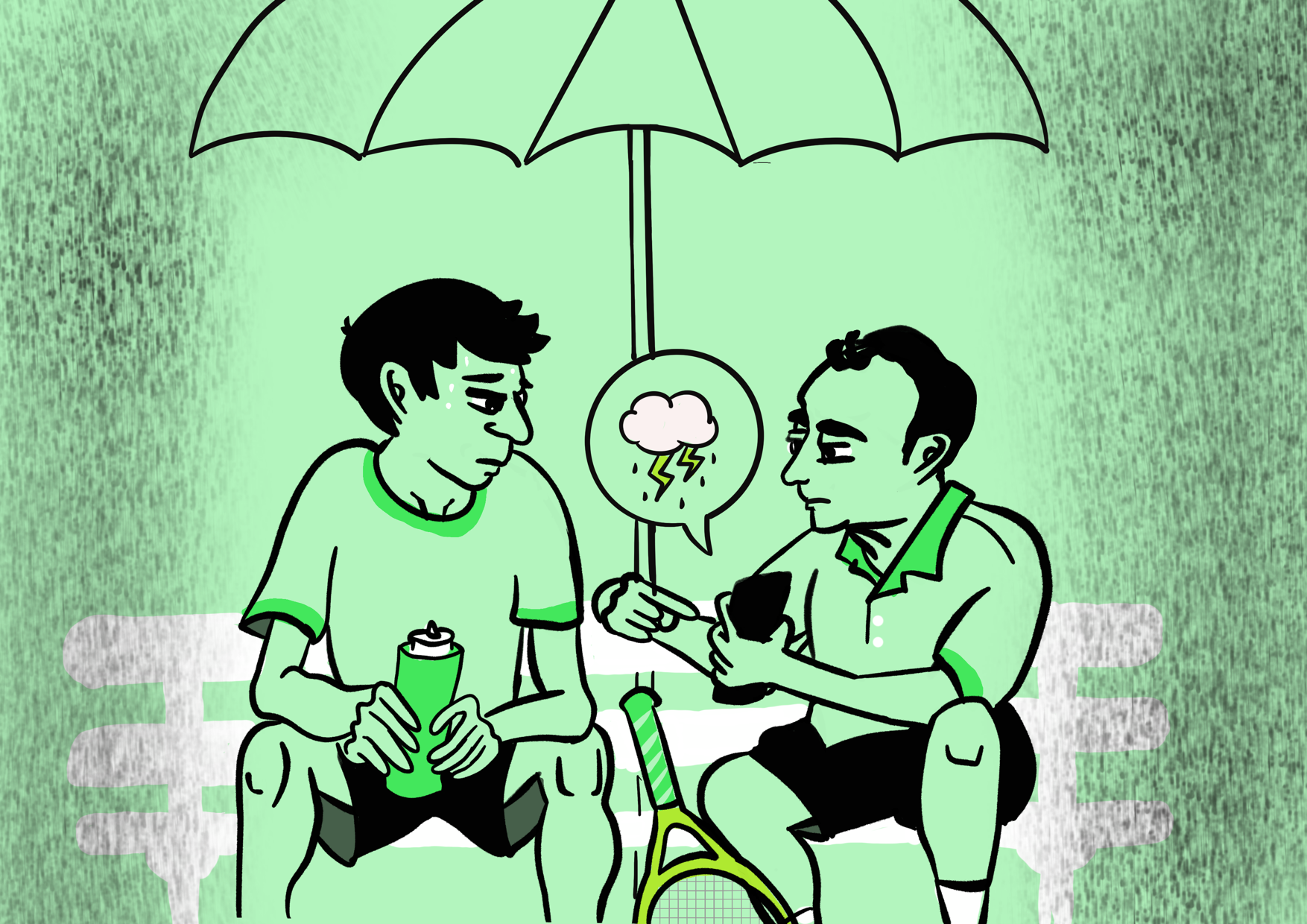
Unfortunately, all tennis players who play outside will eventually fall victim to one of the most infuriating aspects of the game–weather. Tennis matches often see delays and cancellations due to extreme conditions. Rain is one of the most frustrating since it takes a while for the court to return to normal. You might be left wondering, how long is it going to take this court to dry? This article summarizes all the factors that affect a court drying.

Court Surface
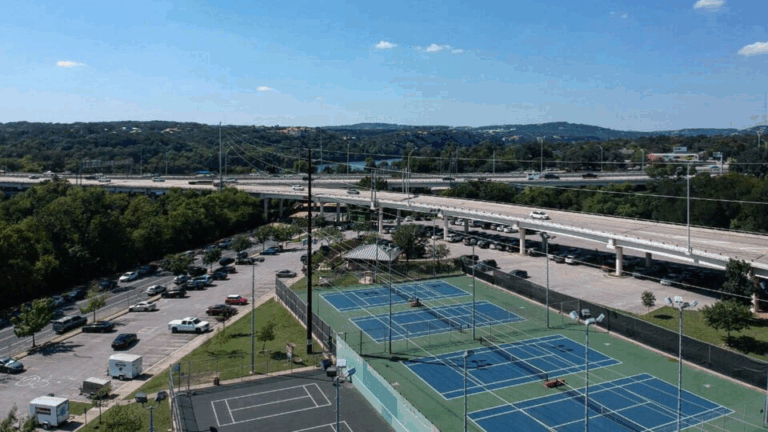
The surface of the court affects how a tennis court dries. This surface would most commonly be hard or clay. In public recreational areas, you might find asphalt courts, whereas in elite clubs, you might find grass courts instead. Let’s discuss what each court surface makes of their drying time.
Clay is the best surface to be playing on if it starts to sprinkle or drizzle. While you should never continue playing if the conditions are unfavorable, to avoid injury play on clay over slipper hard court. However, if it rains heavily on clay, you will be probably waiting at least an hour for the court to be playable again. However, some clay courts can take up to a day to dry. This is dependent on the rest of the conditions we will mention, including court slope and weather conditions.
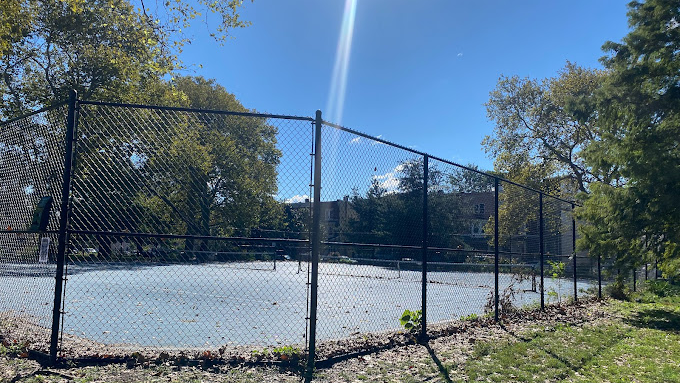
Hard courts, compared to clay, are much more dangerous to play on when wet, so be careful! If you are playing a match or for fun on hard courts, as soon as you notice rain coming down, reorganize for a later date. This is a great way to get injured. If it rains heavily on hard courts, expect two hours at least for it to dry completely. This really depends on the other weather conditions for that day.
Court Slope
Another factor that affects how long it takes courts to dry is court slope. A fact that not all tennis players know is that tennis courts do have a slope to them. Hard courts are designed to slope to one plane. This slope can be from 1” in 10’ all the way to a 1% slope. How does this affect the way the court dries? Well, it affects which areas on a court dry first and how tennis courts dry. This slope helps tennis courts manage rain and run-off to begin. If done properly, this prevents “hotspots” on the tennis court from retaining as much water, ideally pushing water outwards so that puddles accumulate off the court.
Weather Conditions (Sun & Wind)
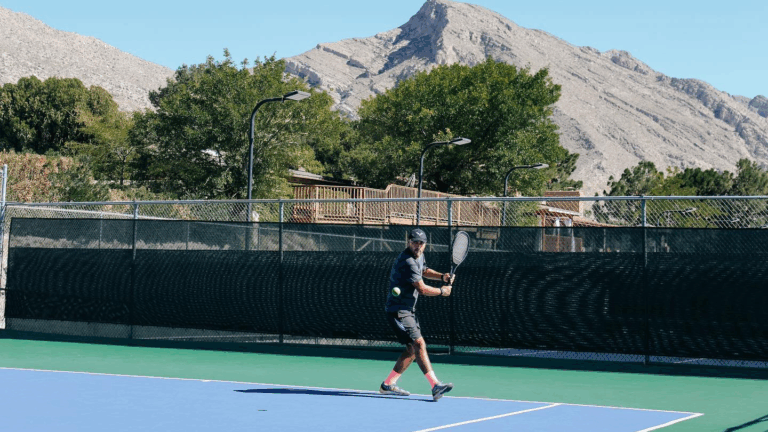
The final factor that affects how tennis courts dry is weather conditions. This includes sun, wind, humidity, and more. With all court surfaces, the sun will help dry wet courts faster. For example, in Texas, a tennis hot spot, players can be grateful that the summers are full of hot and sunny weather and low humidity. This means, if a court is wet, it will not take as long to dry as a place like Florida, where there is higher humidity. Even though there is a lot of sun in Florida, courts will still take longer to dry due to this component. Wind also affects the way a court dries–in many cases, wind post-rain can be helpful because it acts like a dryer. However, rains filled with heavy winds can do more damage and prolong drying time because they end up spreading water all over the court! With weather conditions, there is a lot of nuance to the way that they affect court drying time.
Time for Tennis Court to Dry Takeaways
The most important takeaway with court drying time should be to prioritize your safety. When you’re playing tennis, you should prioritize your safety no matter what; however, follow this rule especially when it comes to wet hard courts! If you are experiencing a rain delay, regardless of the court surface, you can expect about an hour of waiting. If you want to guess the drying time in more detail, you can examine the other factors–if the court is accumulating water in the center or not (the slope) or the weather conditions.