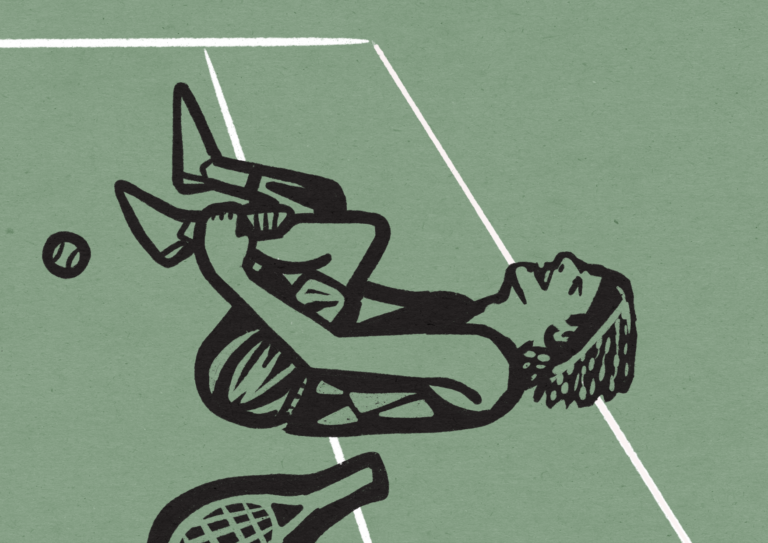

The Best Tennis Stretches
Tennis might be super fun and look effortless when played, but it’s a full body workout. For beginners, you will be sore in muscles you didn’t even know you had. Rigorous exercise like tennis must be accompanied by a warm up and a stretch. Don’t try and go from 0 to 100. You have to ease into it. If you think you can just show up at the court and start playing, you’re setting yourself up for injury. Stretching, which only requires 5-10 minutes, can take your tennis to the next level. The more you stretch the more flexible you become.
There are three big stretching categories for tennis players: dynamic, static, and miscellaneous. The most common before working out, is dynamic stretching. If you’re new to stretching and don’t know where to begin, dynamic stretching is a good place to start. If you feel yourself getting sore in certain spots, incorporate some muscle-focused stretches. Here, we’ll breakdown other stretching ideas, miscellaneous stretches, that can take your tennis game to the next level and keep you playing for a while.
Dynamic Stretches
Dynamic stretches are stretches while moving. This is a more effective way to get your body ready to play. With dynamic stretches you’re helping your muscles work more efficiently and getting them active before you start a tough workout. They also help improve coordination, focus your nervous system, and prep your heart and lungs for a workout.
The most basic dynamic stretch you can do is the arm-circle jog. If you don’t think of yourself as very fast or agile, that doesn’t matter. Try to get your heart rate elevated, and focus on doing strong arm circles with good form. One way to do this quickly when you hop onto the court is to jog the two long lengths of the court and on the baseline, backpedal with arm circles. Or, add the arm circles into the jog. Regardless, of whatever style you do, this dynamic stretch one of the best out there.

Walking lunges, skipping, and side shuffles are three other dynamic stretches you can incorporate into your pregame routine. These movements help simulate much of what your body does when playing. Lunges are useful for when you have to bend your knees for groundstrokes, skipping helps to get your feet firing, and side shuffles warm up the muscles needed to move for baseline shots.
Static Stretches
Consider doing some basic static stretches, including pulling one arm across your body to stretch your shoulder, standing and touching your toes, or a standing held lunge. This way, especially if you’re injury-prone, your body feels more comfortable and relaxed when you start dynamic stretches.
Tennis elbow is one injury that can be avoided by properly stretching. Tennis elbow refers to the “swelling or tearing of the tendons that bend your wrist backward”, caused by repetitive forearm motion. Many tennis players, especially beginners who start playing frequently without stretching, report pain and along the forearm area.
Nip this in the bud before you experience any pain. Do the tennis elbow stretch. Stand up, with a strong core, and reach your dominant arm out. You should extend your wrist so that your palm faces out and your fingers are lifted to the sky. The opposite hand can help guide you with a little pull. Do this for thirty seconds, then switch so that your fingers face the ground and your palm faces out. Repeat the rep and then switch arms.
What are some other static stretches that are helpful? Try out the spinal lumbar twist. Start by lying down on your back, preferably on a mat but ultimately any space you can fit laying down. Pick your starting leg and lift it to a 90 degree angle while keeping your other leg straight, take your opposite arm, and help guide your leg to the other side till you feel a good but not painful stretch. Hold this position for 30 seconds, and switch sides! Increased flexibility and mobility in the spine is important considering the amount of twisting and turning a tennis player performs during a match.
A lot of tennis players also complain about tight hamstrings. A quick, simple stretch is to sit on a mat or hard surface with your legs straightened. Keeping strong posture, and bending from the waist, reach out to your toes with arms extended. This stationary stretch is perfect pre-exercise. You can do this for 20 seconds and then repeat 5 times.
The standing calf stretch is also a great static stretch for tennis players. Calves and Achilles get a lot of use and wear from quick dynamic footwork associated with tennis movements. To perform this stretch you will need a wall, tree, or fence. Stand facing the wall and put both hands on the wall extending one legged behind you while keeping your heel as far to the ground as you can. You will feel a stretch in your calf and hold that for about 20 seconds. Switch legs and repeat as necessary.
Miscellaneous
The last category of tennis stretches is miscellaneous, meaning a bunch of tennis-specific stretches that do not fit neatly into the categories of dynamic or static. This includes using special equipment, such as resistance bands, or making use of other equipment, such as tennis balls or the racket for stretches.
Sample Warm Up Plan
1. Arm-circle jog
As mentioned in the dynamic stretching section, this cardio warm-up is important to any tennis player’s warm-up. Do two jogging laps around the court while engaging your arms too. If you’re doing this pre-match, this can be a great way to generate mental clarity as well. If this is just your regular warm-up, during the jog, think about your intentions for your time on the court. What are some things you want to work on? How can you maximize your strokes for the day? How does your body feel? This initial dynamic stretch can help you center yourself physically and mentally.
2. Hamstring warm-up
Hamstring injuries are common in tennis, so here are some ways that you can stretch your hamstrings before getting on the court:
- Legs Swings: All you need here is a wall or a fence by the court you’re playing at. Start by swinging your right leg forward and backward in a controlled, fluid motion. Do 15 swings with each leg. Next, face the wall and perform side-to-side swings with one leg, crossing it in front of your body.
- High Knees and Butt Kicks: Both exercises are great ways to engage your hamstring muscles and glutes. Just make sure that you’re using proper technique and keeping your core engaged. You can do one half lap of the court with high knees and then alternate to butt kicks, consciously engaging your hamstrings with each kick.
3. Resistance band warm-up
A resistance band is a great investment no matter your tennis level. You can use it on-the-go, and it’s easy yet super effective. Bands aid in muscle stability and endurance, all while making you stronger. There are many different ways to use resistance bands, depending on what you want to target. From reverse fly, to low or high chops, to squats, there are various workouts that can be achieved with just a band and a fence or net to attach it to. Be sure to not overdo it here because you just want to warm yourself up and not tire out your muscles.
4. Wrist warm-up
Tennis wrist injuries are no joke! They can impact every aspect of your tennis game. One simple exercise you can do is just squeezing a tennis ball! For 10 reps of 5 seconds with each hand, extend your wrist and squeeze the tennis ball as hard as you can. After doing that, do wrist circles. How do you do these? Put your hand into a fist, extend your forearm, and slowly circle your wrist. Do 20 circles clockwise, 20 counterclockwise, then switch to the other hand.

5. Shadowing
Shadowing is essentially going through the motions without actually hitting a ball. To perform “shadowing”, you can start in ready position, and pretend you receive a forehand then backhand. Go through the proper footwork, plant your feet, swing your racquet, get back to ready position, then “hit” a groundstroke from the other side. Perform five strokes on each side, then take a rest. Repeat this 2-3 more times if necessary. After doing all your not tennis-based stretching, this helps get your mind and body in the zone for practice or match.
6. Neck Stretches
This article is on the list because you’re definitely not going to think of it when thinking about a proper tennis warmup! We often forget to think about our neck and the tightness we can hold there. This stretch takes a minute at the start of your stretching routine, but it can really elevate your game. Just tilt your head slightly to one side and hold the position for twenty seconds, or until you feel a light stretch. After you repeat this on the other side, roll your head in a circular motion and count to 30. Repeat this in the other direction. Especially with sharp, sudden movement involving your neck for the service, be sure to integrate this often-forgotten warm-up exercise into your tennis.
Tennis Stretches FAQs
What is the most important type of stretching?
While all kinds of stretches are useful for different goals, dynamic stretching tends to be the best for tennis players. they can help make you a better athlete in addition to stretching your muscles. This form of stretching improves speed and acceleration as well. You can’t, however, do dynamic stretching without static stretching. Pro tip: do not go crazy with dynamic stretches. Keep this portion of your tennis workout only 20 minutes tops. Once you pass that point, you run the risk of tiring your muscles before you even pick up the racquet.
Which warm up is best for preventing injuries?
There’s no perfect warm up routine that’s going to keep you from getting injured. Keep in mind, stretching isn’t one-size-fits-all. While you’re young, you might not notice that your muscles are sore and keep playing through pain, or if you’re an older player, you might already be more likely to experience muscle tightness, soreness, and injury. The best warm up approach anyone can do is a combination of static, dynamic, and muscle-focused stretching. Start by doing two minutes of simple static stretches for key areas.
Try to stretch all parts of your body, even if it’s just one stretch per region. Then move into 5 minutes of dynamic stretches before play with some of the warm-up exercises and stretches mentioned above! The warm up is super important for preventing injuries, but don’t forget about the cool down. If you just do a warm up and forget to do muscle recovery, you might still find yourself getting injured. Exercise takes a toll on the body, so always try to get in a slow, comprehensive warm up that leaves your muscles feeling warm and relaxed.
How do professional tennis players warm up?
If you have cable, tune into the Tennis Channel during one of the Grand Slams before match play! On TV, they show how the pros are warming up before their matches. For a lot of players, this looks like biking on a machine. This is part of Djokovic’s warmup. This gets your body to start moving, elevates your heart rate, and helps you muscles heat up before you hop on the court. Cardio is essential for professionals pre-match, but don’t forget that the pros do static stretches before this. Another component of the pro warm-up is wrist work. If you want to warm up like a pro, check out number four on the list of tennis warm-up exercises!
Professional tennis players know that having a sound mind and body does not just happen 20 minutes before stepping on the court. Something that you can adopt, if you want to try like a pro, is stretching in the morning and at night. This can be five minutes of yoga from YouTube in the morning or stretching out your legs at night before sleeping. If you want to train like a pro and adopt their warm-up routine, remember that the warm-up goes beyond the tennis court.