Why Do Tennis Players Grunt?
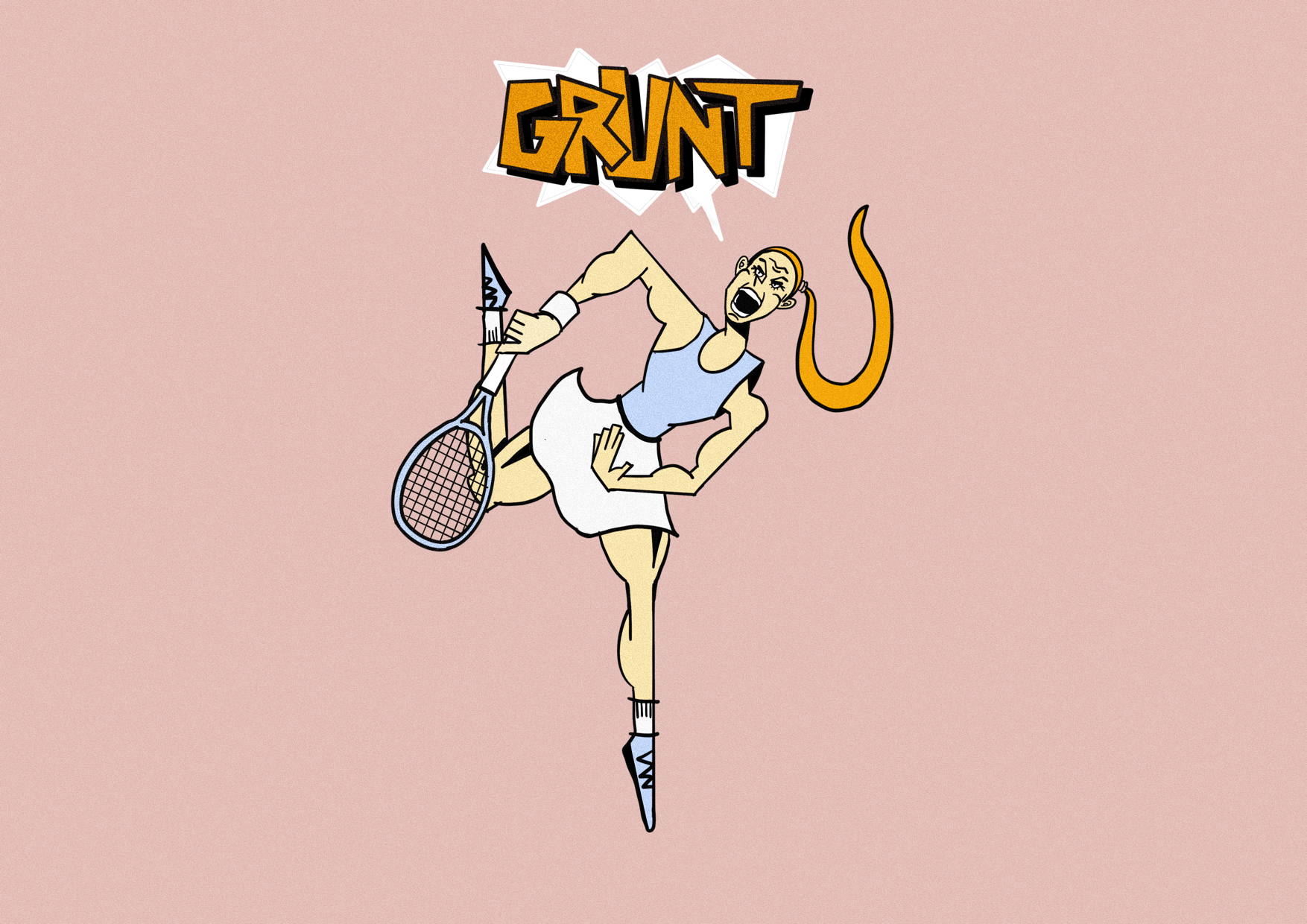
During a tennis match, the players and fans have general rules and etiquette standards to not make a lot of noise. There is, however, one element in tennis that’s loud-the players’ grunts. Even though tennis can be seen as an elitist country club sport, once on the court, competitors become quite fierce. If you watch tennis on television, you’ll hear the noise many players let out each time they strike the ball. Learn why players grunt, when this began, how this falls into the rules of tennis.
Reasons Why Tennis Players Grunt
Scientists, tennis fans, players, coaches, psychologists, and other experts all provide different reasons for grunting. Famed tennis professional and coach Nick Bolleteri, who coached some of the most notorious grunters in the game argued in favor of grunting. He said it’s a “psychological and physiological release of tension” that helps players control their breathing and nail down their timing. Grunt skeptics consider this phenomena to be just a devious, distracting tactic to bother one’s opponent, but there might be something to it.
1. Power
Power is one of the biggest reasons that players grunt. It’s scientifically proven by a study that found that players who grunted during groundstrokes versus those who didn’t actually hit the ball 3.8% harder. The velocity improved for grunters on serves, jumping to 4.9% opposed to their non-grunting counterparts. Following this research, and realizing that there’s more force production put into grunting, researchers have come to the conclusion that grunting can be a mini performance enhancer.
2. Tension Release
Going off of Bolleteri’s approach to grunting, this might just be an additional step for a player’s groundstroke, volley, or service that can help psychologically and physiologically. Think about this with other workouts. Oftentimes, people in the gym doing a difficult set or exercise find themselves grunting as a means of releasing tension and pushing through–the same applies to tennis. If you’re really exerting yourself on each shot, grunting can be a way of letting it out so that you can best prepare yourself for the next shot.

3. Habit
Another reason is plain and simple. It’s just a habit. Some of the greatest players in the sport can’t recall why or when they grunt–it just comes naturally. For instance, Serena Williams says she started grunting because one of her favorite players, Monica Seles, was a grunter. She recalls trying to imitate her, but eventually, her grunt “just became natural”. Under this category of habit are many players. Maybe they can’t pinpoint why they grunt, but they know that it makes them feel good, confident, and strong, or maybe because tennis is an otherwise quiet sport, letting out a grunt adds some of the fierceness that it can seem tennis lacks.
Official Tennis Grunting Guidelines
There is no official grunting rule in the International Tennis Federation’s comprehensive handbook. What comes closest to touching on the subject is Rule 26, centered on hindrances. The official tennis guidelines for a hindrance are as follows:
“If a player is hindered in playing the point by a deliberate act of the opponent(s), the player shall win the point. However, the point shall be replayed if a player is hindered in playing the point by either an unintentional act of the opponent(s), or something outside the player’s own control (not including a permanent fixture).”
Considering this criteria, it makes it difficult to determine whether grunting is a noise that is specific to the player and their stroke and not a deliberate, distracting act by an opponent.
History of Grunting in Tennis
Grunting has been a staple of the sport since its inception. However, the three effective ringleaders of grunting in the sport are John McEnroe, Jimmy Connors, and Monica Seles. Now, many players let out sounds when they strike the ball, with two renowned female tennis stars with big grunts being Maria Sharapova and Serena Williiams. For men in the sport, Rafael Nadal and Novak Djokovic hold distinctive grunts, whereas star Roger Federer is known for only grunting on selective, usually more “important” points. Complaints about grunting in the Grand Slams date back to 1988, when Ivan Lendl complained to the umpire about his opponent’s distracting grunting.
Notable Tennis Grunting Punishments
Certain players have taken strong stances against grunting as part of the tennis game. For instance, throughout the Grand Slams historically, players have felt personally disrupted by their opponents’ grunting. For instance, in the French Open in 2009, female competitor Aravane Rezaï spoke to the umpire about her opponent’s “shrieking” during the match. No action was taken by officials against her opponent; however, her opponent was booed off the court.
Former professional player Martina Navratilova went as far to say that grunting is a form of cheating in tennis and that it’s reached an “unacceptable level”. Other former players such as Chris Evert have discussed that grunting is becoming louder and more prevalent in the sport. However, no drastic punishments have been taken against grunting for players as of this moment.
Grunting in Tennis Bottom Line
Grunting in tennis yields a wide variety of benefits for competitors. The bottom line is that it has to be natural. Don’t start grunting with each stroke just to taunt your opponent and throw them off guard! Instead, if you find yourself missing that extra “umph” or something special on your strokes, see if it feels natural and helpful to add a grunt in. This can help you get your confidence on your stroke, enabling you to get the power and the nerve you need to turn an okay shot into a winner. Maybe grunting can help you get your timing back on your stroke, if you associate grunting with the moment after hitting the ball. Just make sure that you aren’t using it as an intentional tactic against your opponent!